
Customers do not buy products. They buy performance.
In most industries, there is still a gap between what companies sell and what customers actually experience.
Products are designed, specified, and delivered. But the customer does not feel the product in isolation. They feel how it performs inside their operation. They feel the delays, the inefficiencies, the workarounds, and the support that follows.
This is where value is created or lost. Most companies are still organized around what they sell. Customers experience them based on how they perform.
Customer success, as described by Deloitte, is the proactive orchestration of a customer’s journey to maximize value across the lifecycle. That definition highlights a gap many companies are still trying to close: aligning everything they deliver around real operational outcomes, not individual transactions.
This is what I refer to as value orchestration.
It is the ability to organize product, service, data, and partnerships into a system that improves how the customer operates. When these elements are aligned, performance becomes more predictable, issues are resolved faster, and complexity is reduced.
It also requires a shift in how products are designed and positioned. The product portfolio itself needs to become an enabler of value generation rather than a set of standalone specs or offerings. Each product or solution should improve how the customer operates as part of a wider, interconnected ecosystem.
Leading companies across industries are already operating this way.
Rolls-Royce built its position in civil aerospace by focusing on long-term operational performance across the life of the engine, supported by service models that remain a major part of its business.
Apple has created an ecosystem where hardware, software, and services reinforce each other. In 2024, the App Store ecosystem facilitated $1.3 trillion in billings and sales, reflecting the scale of value created beyond the device itself.
John Deere has connected equipment, data, and operations across agriculture, with a goal of linking 1.5 million machines by 2026.
In each case, the product remains essential. The advantage comes from how everything works together.
What this looks like from the customer side
After years on the airline side of the table, you develop a very clear view of what suppliers get right, and where they fall short.
You stop focusing on what a supplier says and start focusing on what actually happens in operations. Does the solution perform consistently during a tight turnaround? Does it reduce friction across the process? Does the supplier stay engaged after delivery? Does it improve one part of the operation, or several at the same time?
The difference is rarely about product specifications.
It comes down to how well the supplier understands the operation and how consistently they stay connected to it.
In aviation, each piece of equipment influences multiple parts of the operation at once. A catering trolley influences fuel burn, crew handling, turnaround efficiency, maintenance planning, and lifecycle cost. A cooling solution affects safety, consistency, compliance, and workload. A digital layer affects visibility, accountability, and decision-making.
In that environment, gaps in delivery become very visible.
Strong products can still sit inside fragmented experiences. Over time, that creates friction. Issues take longer to resolve, workarounds become part of daily operations, and opportunities to improve performance are missed.
Customer expectations are also evolving.
McKinsey has highlighted that B2B loyalty is increasingly up for grabs, with customers willing to switch suppliers for a better experience.
In aviation, the economic pressure substantially reinforces this shift.
Fuel represents around 30% of airline operating costs. Every kilogram and every inefficiency compounds across fleets and flight hours. Small improvements, applied consistently, become material.
Customers are looking for solutions that create leverage across the system.
From supplier to strategic partner
At Driessen, value orchestration shapes how we think about our role.
The company has built its position through engineering strength, reliability, and long-term relationships with airlines worldwide. Those foundations remain critical. The next step is to connect them more deliberately around the customer’s operation.
Driessen’s portfolio reflects this direction, with a focus on customized, cooling, connected, and lightweight solutions designed to work together.
Being part of CCE Group extends this further. It allows us to integrate capabilities across companies, combining equipment, cooling, and digital visibility into more complete solutions.
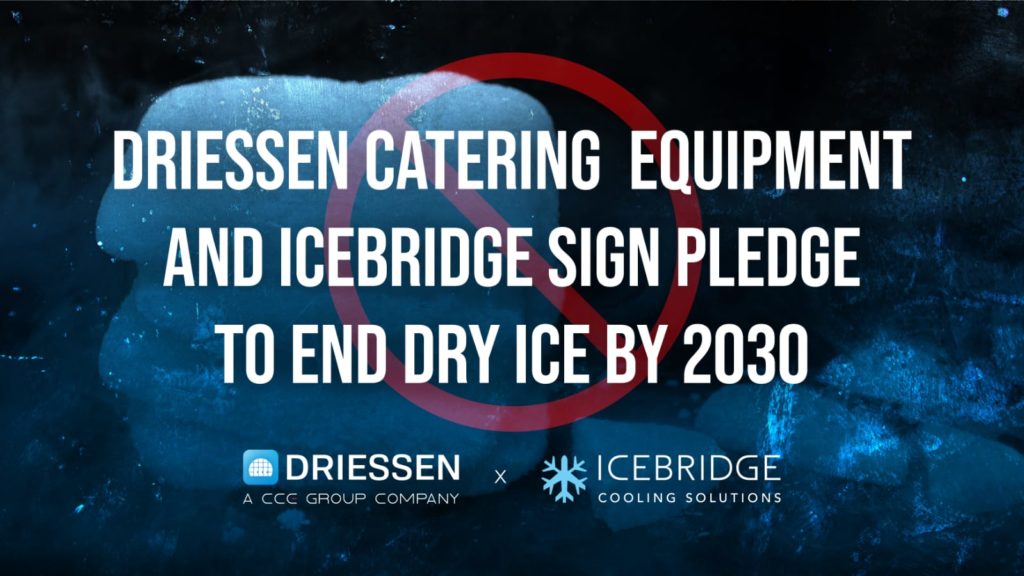
The Vision Zero Dry Ice commitment, recently launched with Icebridge, is a clear example.
The objective is to improve safety, reduce handling complexity, increase consistency, and lower total cost of ownership by integrating cooling into the equipment system rather than treating it as a separate process.
This is how value orchestration becomes tangible.
It shows up in fewer operational disruptions, faster issue resolution, and more predictable performance over time. It strengthens relationships because customers know who is accountable and how problems will be handled.
The standard going forward
Suppliers who orchestrate value across the full customer experience will set the pace in this industry.
The shift is already visible. Performance is assessed across lifecycle cost, operational impact, and reliability at scale. Engagement is expected to be structured and ongoing. Solutions are judged by how well they fit into the wider operation.
This is where real differentiation is created.
When value is coordinated across product, service, and system design, customers experience fewer issues, clearer processes, and stronger outcomes. Over time, that builds trust and continuity.
That is how suppliers move beyond transactions to become strategic partners.