
Hamburg, Germany, 15 April 2026 – At WTCE, the biggest event in the airline catering industry, Driessen Catering Equipment and Icebridge signed a joint pledge committing, from today, to develop no new products that rely on dry ice. Through the launch of their Vision Zero Dry Ice campaign, the two companies are also encouraging airlines to fully move away from dry ice by 2030 and adopt safer, more sustainable, and more efficient cold chain solutions.
The pledge marks a public commitment to move away from an outdated cooling method that is expensive, inconsistent, energy-intensive, and potentially dangerous for the crew members handling it. It also reflects a broader ambition to set a new standard for cold chain performance, built around safety, sustainability, operational simplicity, and Total Cost of Ownership.
For decades, dry ice has been a standard part of airline catering operations. But standard does not mean smart. It must be stored separately, handled as a regulated material, and managed by trained personnel. That adds complexity, increases risk for those handling it, and can result in uneven temperature distribution within trolleys, leading to inconsistent food quality and increased waste. It also requires continuous replenishment due to sublimation, and significant energy input during production, making it a poor fit for an industry under growing pressure to reduce emissions and improve environmental performance.
Through Vision Zero Dry Ice, Driessen and Icebridge are challenging that legacy model. At the heart of the campaign is Icebridge’s industry-leading passive cooling technology. Its cooling cassettes require no electricity and no dry ice, using pre-conditioned thermal energy to maintain stable temperatures for extended periods across multiple flights and ground time. This enables a more controlled and predictable cold chain without reliance on consumables or onboard power.
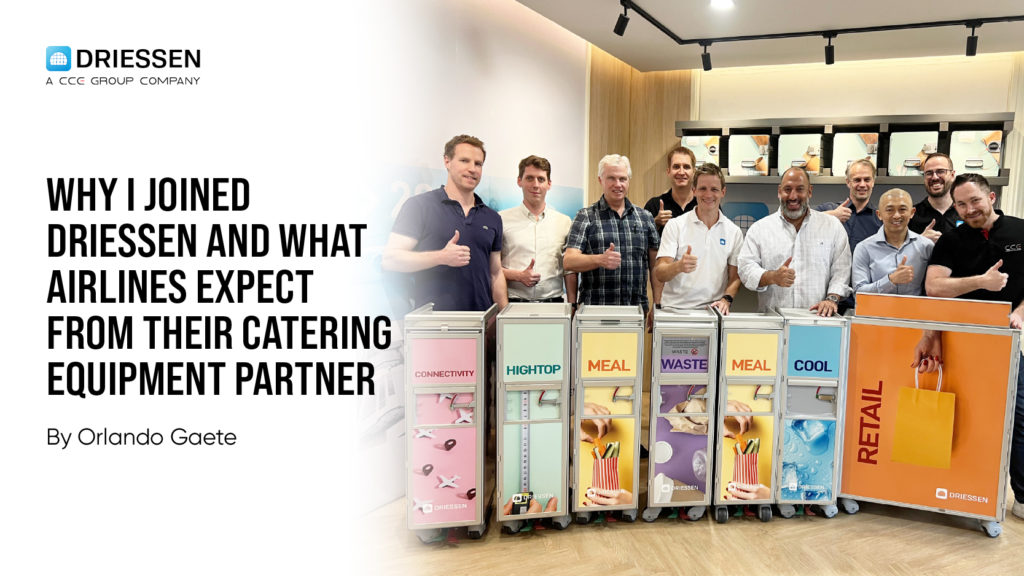
Combined with Driessen’s expertise in onboard service equipment, including the Cool Trolley platform, the partnership creates a fully integrated system where cooling and equipment are engineered to work together. This approach improves temperature consistency, reduces handling steps, and simplifies operations across the entire catering workflow.
The business case is as strong as the sustainability case. Savings from the elimination of dry ice can quickly compound from hundreds of thousands to even millions a year, depending on the size and scale of the operation. Overall, the potential savings become substantial, driven by reduced consumables, lower handling requirements, and improved operational efficiency.
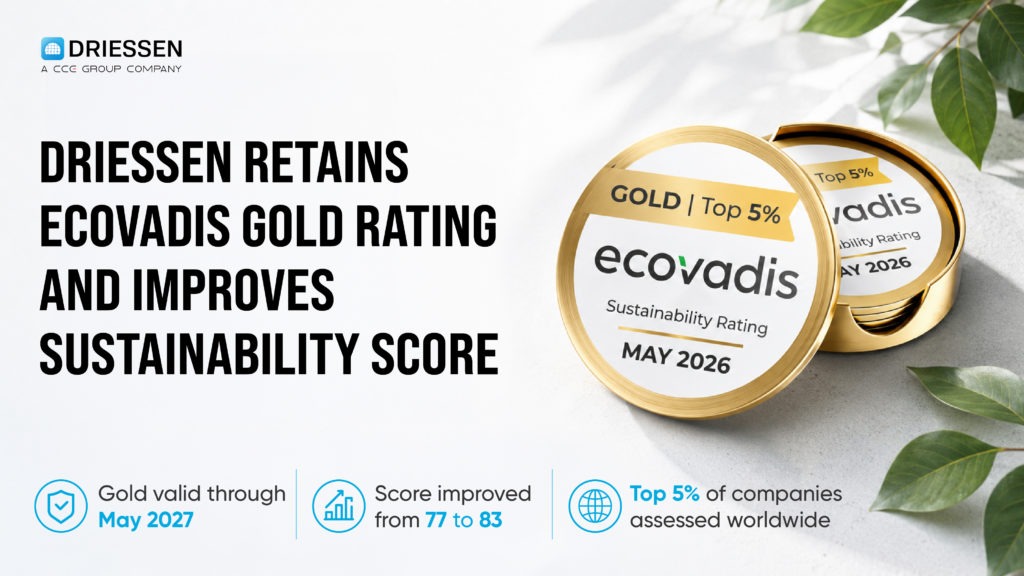
This is one reason Driessen sees the move away from dry ice as closely tied to its wider focus on Total Cost of Ownership. As a company with EcoVadis Gold certification, Driessen has already demonstrated its commitment to sustainability, long-term value, and more responsible operating models. The acquisition of Icebridge by parent company CCE Group earlier this year reflected that same mindset. Driessen long admired the company’s cooling solutions for a simple reason: they solve a real industry problem in a smarter way.
“Dry ice has been accepted for too long as just a normal part of the inflight catering process,” said Orlando Gaete, CEO of Driessen. “But when you step back and really consider it, it adds cost, complexity, risk, and inconsistency. We believe airlines are being pressured from all sides and are looking for reliable solutions that are simpler, safer, and far more sustainable.”
“At Icebridge, we have spent years proving that airlines do not need to rely on dry ice to achieve strong cold chain performance,” said Jarmo Aurekoski, CEO of Icebridge. “Our passive cooling solutions require no electricity, deliver stable and evenly distributed temperatures, and reduce the operational complexity that has been accepted for too long as normal. With Vision Zero Dry Ice, we are taking that belief to the industry stage together with Driessen and making our direction clear.”
With this pledge, Driessen and Icebridge are committing, from now on, to no new dry-ice-based product development, while encouraging the wider industry to leave dry ice behind by 2030 and embrace more modern, sustainable, and safe solutions.
About Driessen Catering Equipment
Driessen Catering Equipment is the global market leader in onboard catering equipment for the aviation industry. With more than 85 years of experience, Driessen designs and manufactures galley equipment solutions that combine lightweight engineering, operational reliability, and long-term durability.
Trusted by airlines, caterers, and OEM partners worldwide, Driessen’s portfolio includes full-size and half-size trolleys, containers, and integrated galley solutions designed to perform consistently in demanding airline environments.
About Icebridge
Icebridge is a Finnish developer of cooling solutions for the aviation industry. Its product range includes cooling cassettes, trolley coolers, cooling chests, and oven insert cases, designed to maintain chilled temperatures for extended periods. Trusted by more than 70 airlines, Icebridge’s award-winning innovations support catering operations worldwide. The company is headquartered in Tuusula, Finland.
About CCE Group
CCE Group is a global aerospace equipment platform headquartered in Paris, France, with operations in the United States, the Netherlands, Finland, and Thailand. The Group brings together market-leading businesses in cabin and cargo equipment, uniting exceptional niche leaders into a global aerospace platform while preserving what makes each company unique.
CCE Group’s portfolio includes Driessen Catering Equipment, the market leader in onboard catering equipment; Icebridge, a specialist in onboard cooling solutions for airline catering; AviusULD, a global leader in unit load devices and cargo digital services; and Trip & Co, a specialist in advanced air cargo protection systems.